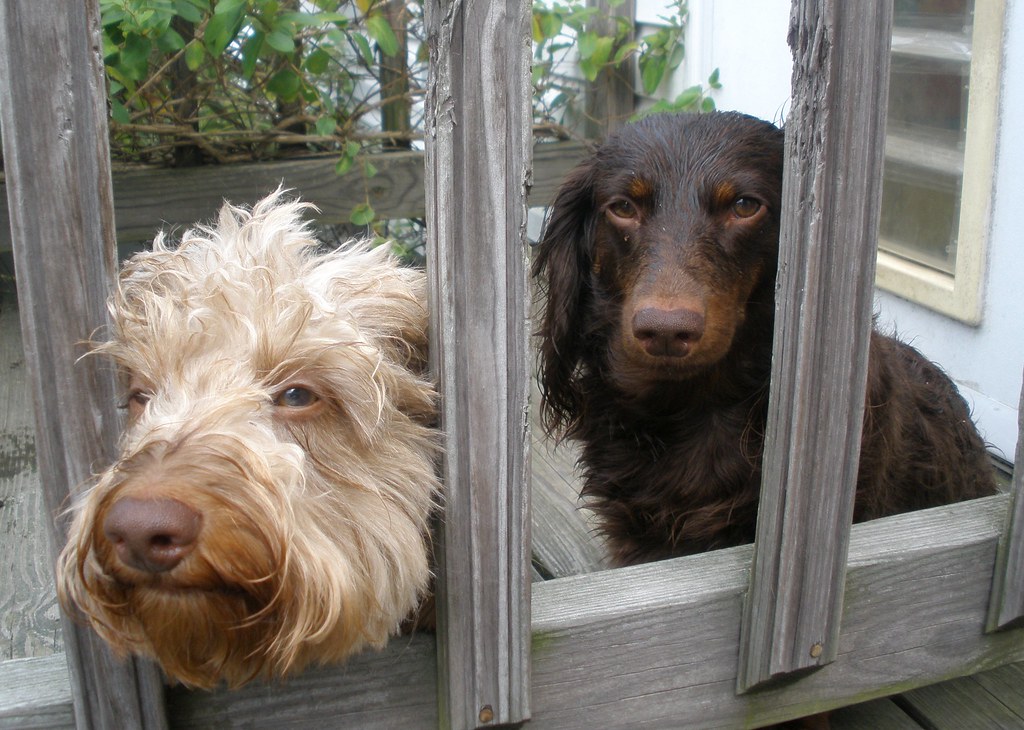
Where your dogs are your best friends, they can also get ruined and harsh in public and friends when they are not properly trained. Therefore, it is always recommended to train your dog with some professional dog trainer if you are not that much eligible to train your dog. Dog obedience training requires you to cover a number of aspects. This article will discuss some important factors which should be kept in mind while training your dog and giving him obedience lectures. At first place, you should understand the fact that dogs are equally sensitive like your family, friends and relatives. Therefore, you should have a very friendly behavior with your dog.
If the dog runs past you, turn 180 degrees and run in the other direction. Watch over your shoulder and as the dog gets close, turn and encourage the why does my dog barking at other people (
www.Seawayads.ca) bark at other dogs to come right to you. As your dog begins to understand the exercise, and you are starting to get further away from him, try to make yourself as tall as you can when you call him in. If you drop down into a hunch or crouch then the smaller you will be to the dog.
Initially you may think that the method is not working at all. However, as is the case with so many things, just be persistent and keep at it until you begin to see the result that makes your efforts worthwhile. Keep each training session brief, and be prepared for it to take several weeks to reach your goal. You should find that it becomes easier as time passes and your dog grows used to his regular training.
By going to a class for dog obedience, you will not be without
advantages. A few of the advantages include: - instant proximity to ask a trainer who is professional any questions. Any mistakes you make can be corrected by the trainer. You can view or hear how your instructor handles your canines.
You can also try a high jet of water from a high powered water gun or hose connection. Remember to always give the clear, loud verbal command as described above, then if they continue give them the last verbal command and wet them.
What you want in the long run is to gradually socialise a dog until he accepts gentle handling, leashing, crating, and other day to day interactions. This can be a long process, though (an unsocial wolfdog "hybrid", for example, can take 6 months to a year of careful rehabilitation to become a reasonably civilised companion) and requires much more than a mere article or two to teach. This essay focuses on some short term techniques that can be used in reactive dogs a pinch.
Here are some training tips that may help while walking your dog. First off, have the attitude that you are in charge and the one who is doing the walking not the one being dragged down the street. Establishing leadership starts when you are putting on your dog's leash. Is your dog going nuts and being hyper? Then wait until it calms down or put it in a "Sit/stay" and wait until it is calmer. Don't reward it for undesirable behavior. Once calm and leashed, do not let it pull the lash tight. The industry standard is a "loose leash." We want to walk with a leash that has some slack in it. That way I there were an incident there is some slack to use to manage any reactive situations that may arise. But, it also just makes for a more relaxed walk for both you and your dog.
Raising your pet and teaching him to be a well-behaved dog can be one of the toughest challenges you will ever face. You want this animal to be a part of your family, but many times, you might find that your pet will have a different personality than you thought it would. Since your dog cannot talk to you, it's up to you to try and decode his body language and behavior to find out what he is saying, but if you don't know how to do this, you could just be chasing your tail, so to speak.
Now that I have self-diagnosed my failure, where to begin? I'll digress and say that I do not give out many treats at my house day to day, we usually reserve those for training, and my dogs are not used to getting treats for basic, household behavior these days. Right or wrong, I just don't mess with treats much on a day to day basis, unless it's a small cookie when I leave the house. As youngsters, or being new to the house, treats are dispensed when learning the acceptable behaviors in our family. But with four adult dogs, the most recent being Gizzer arriving three years ago, daily treats for routine manners have gone by the wayside.
If you are patient and positive then your dog will learn quite quickly and he will be a joy to take out for a walk or when visit people's houses. Dog obedience training is something that every dog needs to learn and it shouldn't take long for him to understand. It is a good way of connecting with your dog and you will be rewarded with a loyal and steadfast companion. Respect your dog and he will respect you.